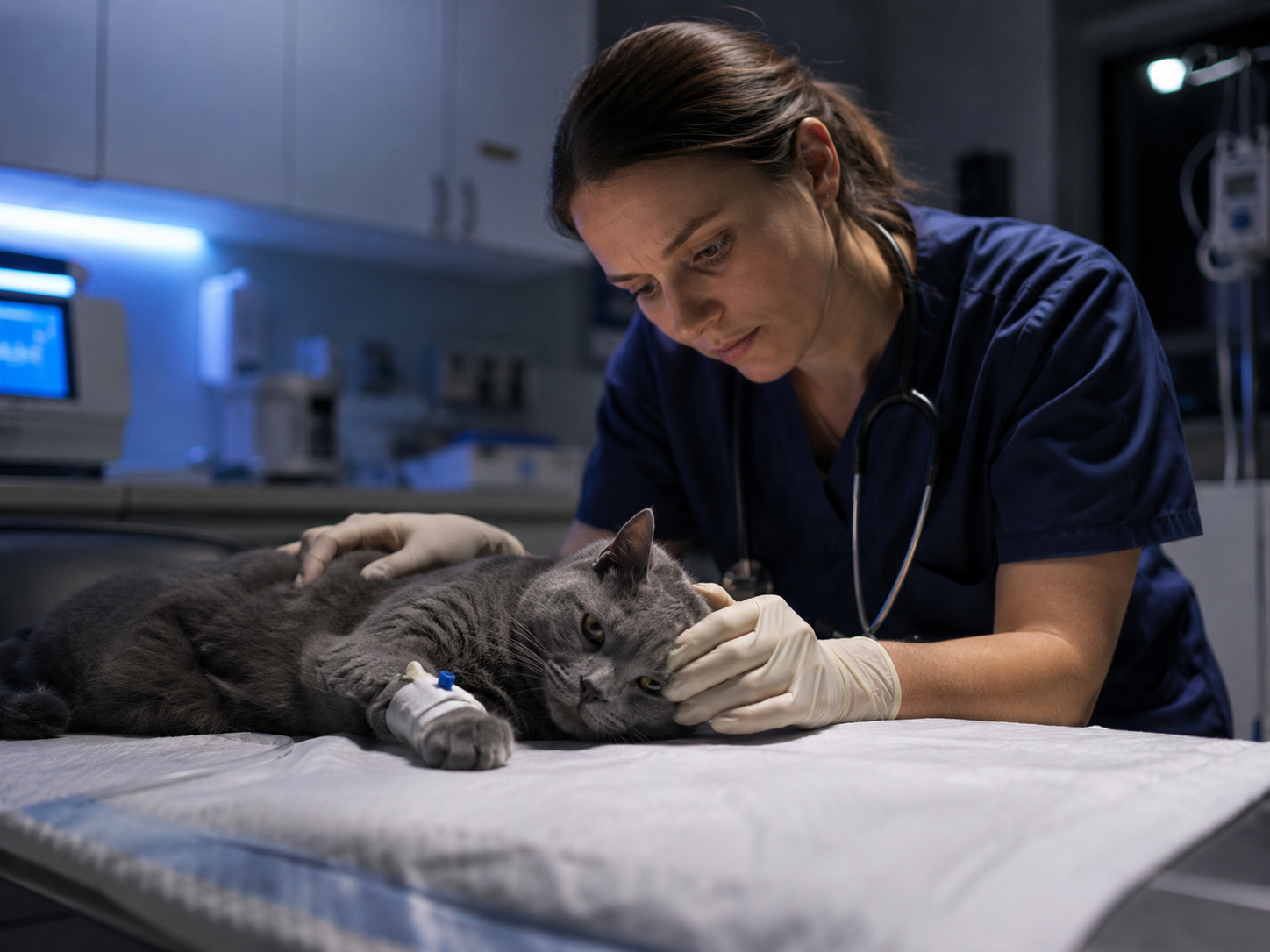
What urinary-blockage treatment can involve in Hattiesburg
A blocked cat often arrives at the clinic after repeated litter-box trips, straining, vocalizing, hiding, vomiting or becoming lethargic. In male cats especially, complete obstruction can become dangerous because the cat cannot pass urine and electrolyte abnormalities can develop. The veterinarian usually needs to assess the bladder, hydration, circulation and blood chemistry before or during stabilization.
For pet owners in Hattiesburg, the appropriate destination may be a clinic in the Pine Belt and nearby south-central Mississippi communities that can provide catheterization and hospitalization. Some general-practice clinics can treat stable cases during the day. After hours, or when the cat is unstable, an emergency hospital may be safer. The service level matters because blocked cats often need more than a quick outpatient visit.
What usually changes the treatment cost
| Part of the visit | Why it may affect the bill |
|---|---|
| Examination and stabilization | The clinic evaluates pain, bladder size, heart rhythm, hydration and immediate risk. |
| Bloodwork and urinalysis | Testing can identify kidney stress, electrolyte problems and other complications. |
| Sedation and catheterization | Relieving the obstruction often requires sedation and placement of a urinary catheter. |
| Hospitalization and IV fluids | Many cats need monitoring, fluids and repeat checks before the catheter is removed. |
| Complications or recurrence | More severe electrolyte abnormalities, difficult catheterization or repeat obstruction can increase the total. |
This is why a simplistic local price can be misleading. A cat treated early and responding well may have a much shorter hospital course than a cat that arrives weak, vomiting, hypothermic or with dangerous electrolyte changes. The treatment label is the same, but the medical intensity is not.
Owners should also understand that the discharge plan may include diet changes, medication, follow-up testing or additional evaluation of underlying urinary disease. Those later costs are separate from the immediate emergency but still part of the overall care journey.
Why inability to urinate should not wait
If a cat is repeatedly straining and producing little or no urine, especially a male cat, contact a veterinarian promptly. Do not assume the cat is merely constipated. The outward behavior can look similar to owners, but the consequences are very different. A complete urinary obstruction is a true medical emergency.
As the blockage continues, toxins and potassium can build up and the cat can become progressively weaker. Early treatment is generally safer and can prevent a more complicated hospital course.
How to understand the estimate
Ask whether the estimate includes bloodwork, sedation, catheterization, hospitalization, IV fluids, medications and repeat monitoring. Ask how long the clinic expects the cat may need to stay if recovery is uncomplicated. Also ask what findings would extend the stay or change the plan.
If finances are a concern, tell the clinic immediately. The veterinarian can explain which parts of the plan are critical for survival and which decisions may come later. This is not a condition where avoiding necessary stabilization is a harmless way to save money.
Related Hattiesburg and Mississippi cat pages
- Veterinary Care in Hattiesburg
- Cat Urinary Blockage Treatment Cost in Mississippi
- Cat Emergency Vet Cost in Mississippi
- Emergency Vet Cost in Mississippi
- Emergency Vets in Mississippi
Use the statewide urinary-blockage page for broader treatment context and the local hub when you need to move back into Hattiesburg-specific decisions.
What recovery and follow-up can look like
Once the obstruction is relieved, the immediate danger is not automatically over. The veterinary team may monitor urine output, kidney values, potassium and hydration while the cat recovers. Some cats produce large amounts of urine after the blockage is relieved and need carefully managed IV fluids. Others remain painful or develop recurrent obstruction. This is why many blocked cats stay in the hospital rather than going home immediately after catheter placement.
Discharge usually shifts the focus from emergency stabilization to recurrence prevention. The veterinarian may discuss water intake, urinary diet, litter-box management, stress reduction and medication. The exact plan depends on what contributed to the episode and whether stones, crystals, inflammation or another problem are suspected. Owners should ask what changes are most important and what signs should trigger immediate re-evaluation.
The financial lesson is that the emergency bill and the prevention plan are related but separate. The emergency estimate covers getting the cat safely through the obstruction. Follow-up visits, prescription food or additional testing may come later. Planning for those later steps can reduce the chance of another crisis and make the overall care path more predictable.
If the cat begins straining again after discharge, do not assume it is harmless irritation. Contact a veterinarian promptly. Re-obstruction can happen and can become dangerous quickly.
Owners should also distinguish between straining to urinate and straining to defecate, because the postures can look similar. If you are unsure, check the litter box for actual urine output rather than assuming. A male cat making repeated trips with little or no urine deserves prompt veterinary attention. That single observation can be more useful than a long description of how uncomfortable the cat looks.
Keep a simple written timeline of symptoms, medications and major changes before the visit. In a stressful emergency it is surprisingly easy to forget when vomiting started, when the pet last ate, or which medication was given. A short timeline improves communication and can prevent duplicated questions when different staff members become involved in the case.
Before the appointment, write down the pet’s recent eating, drinking, urination, bowel movements and medication changes. That short checklist can expose patterns that are easy to miss under stress and gives the veterinary team cleaner information for triage and diagnostic decisions.
Frequently asked questions
How much does urinary-blockage treatment cost in Hattiesburg?
The cost depends on stabilization, lab work, catheterization, hospitalization and complications.
Is a blocked cat an emergency?
Yes. Complete urinary obstruction can become life-threatening and needs prompt veterinary treatment.
Is urinary blockage more common in male cats?
Male cats are at higher risk because of their narrower urethra.
What signs should I watch for?
Repeated straining, little or no urine, vocalizing, vomiting, hiding and lethargy are important warning signs.
Does treatment always require hospitalization?
Many complete obstructions do, because cats may need catheter care, IV fluids and monitoring.
Why is bloodwork needed?
Bloodwork can reveal kidney stress and dangerous electrolyte changes caused by obstruction.
Can insurance cover treatment?
Possibly, depending on the policy, exclusions and pre-existing-condition rules.
Can the cat block again?
Recurrence can happen. Follow-up care and prevention strategies may be discussed after the emergency is resolved.
What should I ask about the estimate?
Ask whether lab work, sedation, catheterization, hospitalization, medication and rechecks are included.
Can I wait until morning?
If the cat is producing little or no urine, do not assume it is safe to wait. Contact a veterinarian promptly.
Does this page list live clinic availability?
No. Current intake status must be verified directly.
Is this veterinary advice?
No. It is general educational information.
Need help organizing the next step?
Use the assessment to organize symptoms, urgency and treatment questions before contacting a veterinary professional.
Start Free Pet Assessment